

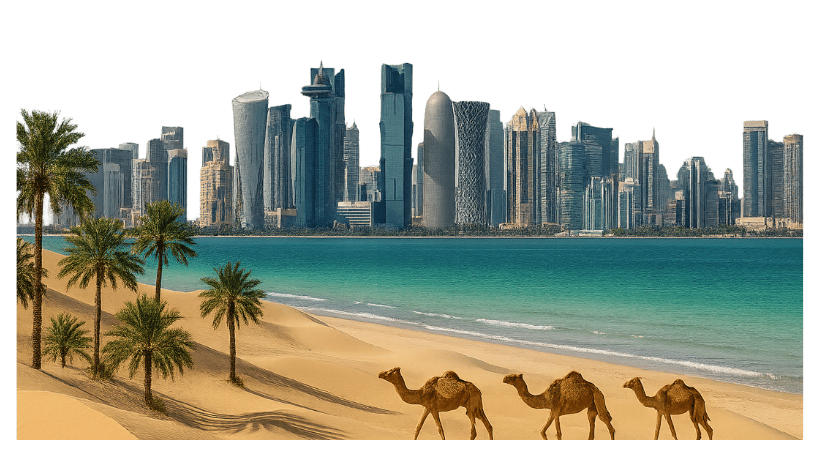

Navigating the Future of Trade: Insights from Davos
The recent World Economic Forum (WEF) Annual Meeting in Davos saw significant discussions regarding sustainable trade and resilient connectivity. Led by HE Sheikh Mohammed bin Hamad bin Faisal Al-Thani, the Qatar Free Zones Authority (QFZ) brought vital perspectives on how free zones and advanced logistics can enhance global cooperation, especially in these rapidly changing times.
The Role of Free Zones in Sustainable Connectivity
During a panel discussion titled "Cooperation, Growth and Sustainability in a New Era", HE Sheikh Mohammed highlighted the crucial role of Qatar’s free zones in fostering robust supply chains. He emphasized that these zones not only support efficient operations but also align with broader environmental and social goals, ensuring that businesses adapt to shifting expectations.
These insights reflect developments outlined in the recent report by the World Economic Forum, which underscores the need for connectivity amidst fragmentation. Recent years have seen a surge in discriminatory trade policies, raising complexities in global markets. QFZ’s strategies focus on leveraging digital platforms to facilitate smoother trade routes, encouraging real-time adaptations to evolving challenges in globalization.
The Future of Global Trade: A Digital Transition
The integration of technology into trade practices is more critical than ever. As discussed in another WEF article, the advent of digital technologies has transformed trade dynamics, making them interconnected yet fragmented. This 'TradeTech Paradox' denotes a need for innovative approaches to overcome the obstacles stemming from geopolitical tensions and economic decoupling.
Through the establishment of robust digital frameworks, Qatar aims to utilize its free zones as test beds for new trade technologies that enhance transparency and efficiency. Such initiatives could set a precedent for how emerging markets can engage with global trade systems without being overly reliant on traditional methods that may hinder responsiveness.
A Look Ahead: Building a Resilient Global Economy
The panel at Davos not only focused on the immediate benefits of QFZ’s strategies but also laid out a vision for the next decade. There’s a shared understanding among participants that building sustainable trade networks requires collaborative actions from various stakeholders, including governments and businesses alike. This unity could pave the way for innovations that address climate change while further driving global economic growth.
As Secretary-General of the WEF, Børge Brende noted, the continued need for purpose-driven globalization indicates that the world must collectively strive for a more sustainable economic framework. This sentiment is echoed in various global discussions around trade which emphasize the necessity of adapting supply chains to climate goals.
Conclusion: Why This Matters
In a world where connectivity plays a crucial role, understanding the intricate links between sustainability, technology, and international trade becomes imperative. The discussions led by QFZ at Davos highlight how nations can transform their approaches to trade to accommodate the complex, evolving challenges of the global marketplace. As professionals and corporate players continue to navigate these challenges, it's essential to foster an environment where innovative practices can thrive, ensuring economic resilience.
By embracing the lessons learned at WEF, nations like Qatar are on the path to redefine global cooperation through sustainable trade systems. For readers interested in global economics, these developments signal a transformative era ripe with opportunity.


Write A Comment